
Pleasant Hill Grain modernizes a highly customized ecommerce operation with Shopware



Informazioni chiave:
Versione di Shopware
Azienda
Funzionalità
Funzionalità tecniche
Vantaggi di Shopware:

Prossimi passi
Pioneers of Ecommerce Modernize the Experience to Scale
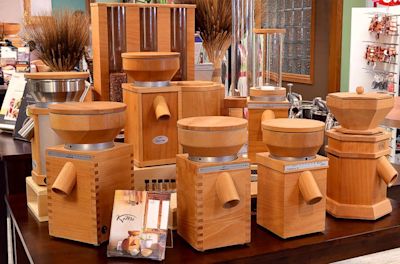
Pleasant Hill Grain has been selling online since the earliest days of ecommerce. They are a family-owned retailer specializing in premium grain mills, bread mixers, brick bread ovens, and other specialty kitchen equipment for home bakers, commercial kitchens, and micro-bakeries.
The family-owned business began in the late 1990s with a simple goal: help people bake their own bread at home. Grain mills, whole grains, and heavy-duty mixers formed the core of the business, serving everyone from home bakers to commercial kitchens.
There was just one problem: modern ecommerce platforms barely existed.
"Our dad taught himself how to make a website," recalls Laurel Olson, Inventory Manager and Digital Content Manager. "He'd never had any training. He just figured it out."
That first website was built entirely in HTML, long before online stores came with product catalogs, configurable attributes, or integrated checkout experiences. Customers often placed orders over the phone after browsing the website, and every improvement came from the family's own experimentation.
Looking back today, Laurel still remembers those early years fondly. "It was always a work in progress. Every day, multiple times a day, the website would change." As Pleasant Hill Grain grew, however, the limitations of that approach became impossible to ignore.
When Growth Outpaces the Platform
For years, the homemade website served the business remarkably well. But as the catalog expanded into thousands of specialty products sourced from manufacturers across Europe and beyond, the company's processes became increasingly difficult to manage.
The biggest limitation wasn't the technology itself. It was where the knowledge lived.
"We had outgrown our capacity for that original website," Laurel says. "That capacity was in my dad's brain and my brain."
Every product, every workflow, and every operational process depended on institutional knowledge. The business needed a platform that could scale beyond the people who had built it. So they decided on Magento as the next step.
Migrating from a hand-built HTML site to Magento represented a major leap forward. Product information could finally be organized into structured catalogs with attributes and variants, which reflected a major improvement over static webpages. Many manual processes became more manageable, and the business gained room to continue growing.
For a time, Magento was exactly what Pleasant Hill Grain needed.
Success Created a New Set of Problems
As the business evolved, so did its website.
Pleasant Hill Grain wasn't running a typical ecommerce store. The company imports specialized equipment from manufacturers in Belgium, Austria, the United Kingdom, and elsewhere, often serving as the exclusive North American importer for those brands. Managing international inventory, long lead times, preorders, backorders, affiliate programs, commercial equipment, and thousands of highly detailed product pages required years of customization.
Those customizations accumulated.
The company worked with multiple development firms over the years, each adding new functionality to support the business. Eventually, the platform became increasingly difficult to maintain. "Our developers described it as spaghetti," Laurel says. "There was really no fixing Magento at that point."
Routine improvements became increasingly expensive. New features often introduced unexpected problems elsewhere in the system. Maintenance costs continued to climb, while confidence in the platform steadily declined. After careful analysis, Pleasant Hill Grain decided to rebuild.
Looking Beyond Magento
To guide the migration, Pleasant Hill Grain partnered with Web Solutions NYC, one of the earliest Shopware implementation partners in the United States. The B2B ecommerce agency specializes in complex implementations for manufacturers, distributors, and multi-brand retailers.
"We were looking for something with less maintenance, faster for us, and faster for the customer." - Jesse Reed, General Manager, Pleasant Hill Grain
But the decision went beyond performance. Pleasant Hill Grain also wanted software that reflected how the business actually operated. "We were looking for something that would automate more of the systems we use in our business," Laurel explains.
Shopware offered the opportunity to integrate the disparate architectures underpinning company operations. Business systems such as warehouse management, reporting, search, payments, and other specialized tools could integrate around Shopware, while Flow Builder and Rule Builder handled much of the operational logic that previously required custom development.
As Jesse puts it, "Shopware became the central hub."
Rebuilding a Complex Ecommerce Operation
Although Pleasant Hill Grain's new website resembles its previous Magento storefront, the work happening behind the scenes is fundamentally different.
"Pleasant Hill Grain is one of those projects our team genuinely loves, because the business is anything but typical," says Yitz Lieblich, Founder of Web Solutions NYC. "They import specialty equipment from around the world with long lead times, so the real work was building a platform that runs the way they actually operate."
That meant rebuilding far more than an ecommerce storefront. Pleasant Hill Grain's catalog extends well beyond standard ecommerce products. Customers configure commercial mixers with different capacities, colors, and electrical specifications. Products arrive from manufacturers around the world with varying lead times. Some orders ship immediately, while others remain on backorder for weeks or months. Throughout the process, customers expect accurate delivery estimates, payment updates, and clear communication.
As the project evolved, so did its scope. The team continued refining workflows and building solutions around the realities of Pleasant Hill Grain's business, from international sourcing to preorder and backorder management.
One of the largest development efforts centered around those preorder and backorder workflows. Working closely with Pleasant Hill Grain, Web Solutions NYC designed and implemented the automation that powers those processes within Shopware.
"That's our business strategy," Jesse explains. "We have excellent customer service. Because we're getting a lot of things internationally with long wait times, we needed to be able to accept backorders, give customers updated ETA dates, send reminders, and make sure they always knew what was going on."
That meant accounting for partially fulfilled orders, changing inventory availability, expiring payment authorizations, drop-shipped products, and constantly shifting arrival estimates. Rather than relying on manual processes, many of those workflows are now automated within Shopware.
"Getting the preorder and backorder automation right, so a customer always knows exactly where their order stands, is the piece we're proudest of. That was their core business strategy, and now the platform handles it automatically." - Yitz Lieblich, Founder, Web Solutions NYC
Replacing Manual Work with Automation
As the team became more familiar with Shopware, they found themselves identifying more and more opportunities to automate everyday work.
"The more we use Shopware, the more we realize, 'This could be done through a flow.'" - Laurel Olson, Inventory Manager and Digital Content Manager.
Flow Builder and Rule Builder now handle many of the repetitive tasks that once required manual oversight. Previously, employees often had to call customers directly when payment authorizations expired during lengthy backorders. Today, customers receive automated emails allowing them to securely update their payment information through their Shopware accounts without involving the support team.
"It's a big time saver for our team," Jesse says. The company also makes extensive use of Shopware's administrative tools, including bulk product updates, customizable data grids, order tagging, and flexible search capabilities, allowing staff to manage thousands of products more efficiently than before.
A More Sustainable Platform
Not every process became faster overnight. Some tasks required employees to adjust to new workflows, and building product pages initially took longer than they had under Magento.
"I think whenever we upgrade something, we have this idea that everything will be better," Jesse says. "That's just not the case." Instead, the improvements have come from the overall direction of the platform. "I would say in general, we are saving time as a company."
Perhaps the clearest sign of success has been something customers never see.
For years, development costs steadily increased as Magento accumulated additional customizations and maintenance requirements. Today, Pleasant Hill Grain has largely moved beyond major feature development and into routine maintenance.
"We can tell just from our monthly bills," Laurel says. "They're starting to come down to a level that we're happier with." Under Magento, she says, those costs had only continued to rise.
Built for the Next Chapter
Today, Pleasant Hill Grain manages approximately 4,800 active products through Shopware while integrating with a broader technology ecosystem that includes SkuNexus for warehouse management, Klaviyo for customer marketing, Avalara for tax compliance, Elasticsearch for search, Apache Superset for reporting, and JetRails for hosting.
Just as importantly, the platform provides room to continue evolving.
The business continues to refine workflows, expand automation, and identify new opportunities to simplify operations. Rather than feeling constrained by its ecommerce platform, the team now views it as a foundation that can grow alongside the business.
Looking back, the migration represents more than a change in software.
Pleasant Hill Grain has spent more than twenty-five years building an ecommerce business, beginning with a website written by hand in HTML and evolving through multiple generations of technology. Shopware marks the latest chapter in that story, giving the company a platform designed not simply to support where the business is today, but where it expects to go next.
Funzionalità utilizzate in questo caso
Scopri il potere delle funzionalità innovative di Shopware - il cuore della nostra soluzione unica. Scopri quali di queste funzionalità il nostro cliente ha utilizzato con successo nel proprio caso. Approfondisci i dettagli e utilizza questa ispirazione per il tuo progetto.
Flow Builder
Automate business processes with the Flow Builder in one intuitive interface. Create workflows for tasks triggered by events without writing code.
Scopri di più su Flow Builder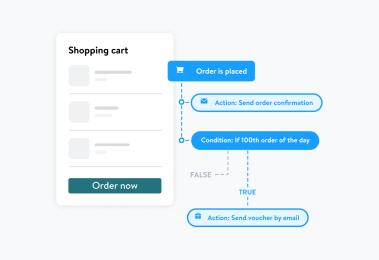
Rule Builder
Define rules using conditions with the Rule Builder. Control pricing, shipping costs, promotions, and other logic.
Scopri di più su Rule Builder
B2B Suite
The Shopware B2B Suite has been diligently developed to automate and facilitate the complex business operations that are prevalent in today’s B2B sector. It is the core of your business – strong, agile and intuitively supporting every move you make.
Scopri di più su B2B Suite