
Contact us
 Download logo as SVGDownload logo as PNG
 Copy logo as SVG
 Visit brand guidelines




Shopware integrates effortlessly with ERP, PIM, CRM systems, custom frontends, and third-party services. Data moves freely between systems, so your entire tech stack works as one connected ecosystem – not a collection of isolated tools.

Shopware is built around APIs. Every function is accessible, extensible, and designed to integrate.

Your frontend communicates with Shopware via API – giving your team the freedom to work with React, Vue.js, Next.js, or any modern framework. No constraints. No forced templates. Just complete architectural flexibility.

Because business logic and presentation are fully decoupled, your team can design distinctive experiences that reflect your brand. Experiment, iterate, and launch new experiences without disrupting core operations.

Shopware serves as your central hub and single source of truth. Your online store, mobile app, social commerce channels like Instagram or TikTok, voice commerce, in-store kiosks, and emerging touchpoints all pull pricing, inventory, and content from the same API layer. One backend. Every channel.

Shopware provides three purpose-built APIs – each optimized for a specific business need, giving you precise control over data, workflows, and automation.
Shopware gives you flexible extension models – whether you need lightweight integrations or deep system customization.

Your commerce platform should unify systems – not create silos.

Synchronize inventory, pricing, and order statuses in real time – even across tens of thousands of SKUs. Eliminate overselling, reduce manual data entry, and ensure that availability updates instantly across every sales channel.

Manage product information in your PIM and push structured data directly into Shopware. Images, specifications, and descriptions are automatically assigned to the correct fields – reducing duplication and eliminating transfer errors.

Every interaction – from completed purchases to abandoned carts – can be forwarded to your CRM or email platform via webhooks. Deliver truly personalized marketing at scale. Reach customers at the exact moment their intent is highest.
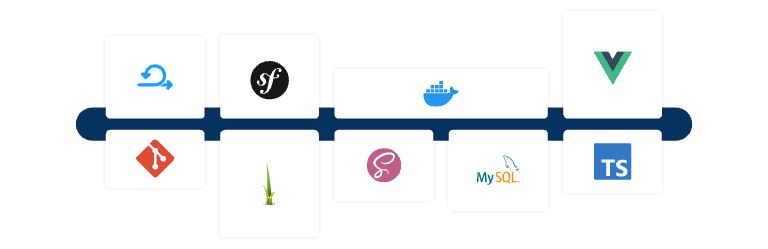
Shopware is built on proven standards like Symfony and Vue.js, providing a modern, developer-friendly framework.
Leverage the full Symfony stack, including dependency injection, events, and clear separation of concerns. The result: maintainable, scalable code.
From a powerful CLI to ready-to-use Docker setups, Shopware minimizes configuration overhead so your team can focus on building.
As an open-source platform with transparent documentation, Shopware gives you full visibility into the core. Extend, customize, and adapt the system to your exact business requirements – without vendor lock-in.
Yes. Shopware’s headless approach allows you to use it purely as a commerce engine. Connect any frontend – from a Progressive Web App to a fully custom React or Vue.js implementation – via the Store API.
Yes. Every feature available in the Shopware administration is powered by the same API accessible to you. There are no hidden capabilities – you have full programmatic access to the platform.
Shopware uses OAuth 2.0, ensuring secure integrations with granular permission control based on the principle of least privilege.
The Sync API enables bulk operations, allowing thousands of records to be updated efficiently. This reduces HTTP overhead and ensures high performance even during large-scale ERP or PIM synchronizations.
Yes. Through plugins, you can define custom endpoints that integrate seamlessly into the existing API structure and execute your specific business logic.
Apps are cloud-compatible and update-safe. Because they communicate exclusively through APIs and webhooks, they do not modify the shop core – allowing you to update Shopware without risking integration conflicts.
Yes. The Shopware Store offers hundreds of extensions and connectors for leading ERP, PIM, CRM, payment, and shipping providers – many ready for immediate deployment.
We’ll help you connect Shopware to your existing system landscape and build a future-ready commerce architecture.