

Starting June 19, 2026, the so-called withdrawal button will become mandatory for many online merchants selling to consumers in Germany. The new regulation is part of German consumer protection law and applies to merchants who conclude distance selling contracts with German consumers. Under the new legal regulation, consumers must be able to exercise their right of withdrawal electronically and directly within the online store – easily, clearly, and without additional hurdles.
The 2026 withdrawal button requirement complements the existing right of withdrawal in distance selling. A written withdrawal policy alone will no longer be sufficient. Instead, merchants must provide a clearly visible digital function that allows customers to submit their withdrawal directly online.
In this article, you will learn:
what the withdrawal button law is about
which merchants and online stores are affected by the requirement
what risks arise if the requirement is not implemented
how to meet the legal requirements with Shopware
and how to review your implementation step by step using our compact checklist
What is the electronic withdrawal button – and what exactly applies from June 2026?
The withdrawal button is a new legally required feature in German ecommerce. Its purpose is to enable consumers to exercise their statutory right of withdrawal electronically and directly within the online store – without email templates, without PDF forms, and without additional hurdles.
Until now, it was sufficient for merchants to provide a withdrawal policy and, if applicable, a sample withdrawal form. As of June 2026, this will no longer be enough.
Starting June 19, 2026, online merchants must provide a clearly identifiable and directly accessible button that allows customers to submit their withdrawal digitally.
Background of the new regulation
The goal of this legislative change is to further strengthen consumer protection in the digital environment.
The legislator argues that while concluding an online contract is usually possible with just a few clicks, exercising the right of withdrawal must not be unnecessarily complicated or hidden.
The new requirement therefore creates greater transparency and lowers barriers when reversing online purchases.
The withdrawal button requirement is based on German consumer protection law. It primarily applies to merchants who conclude distance selling contracts with consumers in Germany.
If your business does not target the German market and you do not sell to consumers in Germany, this specific legal requirement generally does not apply to you.
However, merchants operating within the European Union should closely monitor regulatory developments. The German regulation is part of a broader EU-wide effort to strengthen consumer protection in digital commerce. Other European countries may introduce comparable national implementations in the near future.
If you sell cross-border within the EU, it is advisable to regularly review the consumer protection requirements in your target markets to ensure ongoing compliance.
What requirements apply to the withdrawal button?
According to the current status, the electronic withdrawal process must meet the following criteria:
Clear labeling and visibility – the button must not be hidden or misleadingly worded.
Direct accessibility – no complicated navigation or unnecessary intermediate steps.
Electronic submission – the withdrawal must be submitted directly online.
Confirmation of receipt – customers must receive an immediate electronic confirmation.
Important: The button does not replace the legal review of the withdrawal. Merchants must still verify whether:
the statutory withdrawal period has been observed
the goods are eligible for withdrawal
any exclusion grounds apply
In other words, the button provides a digital entry point for submitting a withdrawal, but it does not automate the entire return and refund process.
Who is affected by the withdrawal button requirement?
In principle, the withdrawal button requirement applies to all online merchants who conclude distance selling contracts with consumers – in other words, traditional B2C online stores.
What about B2B stores?
Pure B2B stores that clearly and exclusively address business customers are not affected.
However, what matters is the actual setup of the store:
Is access clearly restricted to businesses?
Is a valid VAT ID required and verified during registration?
Are consumers explicitly excluded as a customer group?
As soon as contracts can in fact be concluded with consumers, the statutory right of withdrawal applies – and with it, the obligation to provide an electronic withdrawal option.
Small merchants are also affected
Unlike some other regulatory initiatives, the law does not provide general exemptions for micro-businesses. This means that smaller online stores, start-ups, or merchants with low revenue must also comply with the legal requirements if they conclude consumer contracts online.
What is the legal situation for online marketplaces?
Contracts concluded via online marketplaces such as Amazon or eBay are also generally subject to the withdrawal button requirement. The decisive factor is that the contract is concluded with consumers via an online user interface.
In the case of traditional marketplaces, however, responsibility for the technical implementation of the withdrawal button does not lie with individual merchants, but with the platform operator. Merchants usually have no influence over the design of the user interface and are therefore not responsible for integrating the technical function themselves.
That said, the merchant’s obligation to properly process the withdrawal remains unaffected. The merchant continues to be the contractual partner and must handle the withdrawal in full legal compliance.
Does the withdrawal button requirement apply to all products?
There are statutory exceptions to the right of withdrawal – and therefore, in practice, also to the obligation to offer the withdrawal option via the withdrawal button. These include, among others:
Perishable goods (for example, fresh food)
Sealed products for health protection or hygiene reasons, if the seal has been removed after delivery
Individually manufactured or personalized products
Digital content, if performance has already begun and the consumer has expressly agreed that the right of withdrawal expires
In such cases, no statutory right of withdrawal exists. However, merchants must clearly inform customers about these exceptions in their withdrawal policy and ensure that the exclusion is legally valid and properly documented.
Technical and organizational impact of the withdrawal button requirement
At first glance, the new requirement may seem manageable. In reality, however, it involves more than simply placing an additional button in the storefront. The withdrawal button affects existing processes – from its presentation in the frontend to the internal handling of incoming withdrawal requests, as well as documentation and customer communication.
The technical workflow itself is clearly structured. What truly matters, however, is that the new requirements are properly integrated into existing processes. Especially in customized setups or more complex system landscapes, a structured implementation is recommended to avoid operational uncertainty and ensure compliance.
Special requirements for customized and headless frontends
Merchants using custom-developed storefronts or headless architectures face additional requirements. In these cases, it must be ensured that the withdrawal button is not only technically implemented, but also meets the legal criteria regarding visibility, accessibility, and functionality.
This is particularly relevant for stores with:
Highly customized frontends
Third-party templates
Headless architectures
Progressive Web Apps (PWAs)
App-based sales channels
In these setups, the withdrawal button is not automatically integrated through a standard template. Instead, it must be implemented on a project-specific basis to ensure full legal compliance.
What risks arise if the requirement is not implemented?
The withdrawal button requirement is a binding legal obligation. Merchants who fail to comply with the requirements as of June 19, 2026, expose themselves to legal and economic risks.
1. Warnings and cease-and-desist claims
If the legally required withdrawal button is missing or incorrectly implemented, this may be considered a violation of competition law. Possible consequences include formal warning letters, cease-and-desist claims, and short-term obligations to make adjustments – often associated with additional costs.
2. Extended withdrawal periods
If the exercise of the right of withdrawal is hindered or not properly enabled, the withdrawal period may be extended. This can negatively impact planning reliability in returns management and may have financial implications.
3. Reputational damage and loss of trust
An intransparent or complicated withdrawal process affects the customer experience. Transparent processes are not only legally required, but also a signal of professional store management and customer focus.
What does the withdrawal button requirement mean for your online store?
The legal requirements are clearly defined – as are the risks of non-compliance. The key question now is how to implement them in your online store from a technical, organizational, and process perspective.
Especially for existing installations or customized setups, merchants need to assess how integration can be handled efficiently and in full legal compliance. This is exactly where a system-based solution becomes essential.
How to implement the withdrawal button requirement with Shopware
With the Shopware 6.7.9.0 minor release in April 2026, Shopware introduced a native solution for the legally required electronic withdrawal button.
The feature was also backported to Shopware 6.6, allowing merchants with existing installations to meet the legal requirements without upgrading to a new major version.
The feature is part of the core system and is available for the Shopware Community Edition and higher plans. No additional license fees apply.
Implementation in the Shopware standard storefront
In the Shopware standard storefront, the legally required withdrawal button has been provided as an integrated feature. The solution is designed to support the legal requirements at system level and to structure the digital withdrawal process in a reliable way.
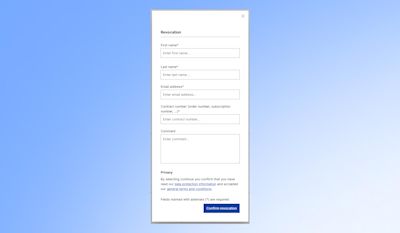
Customers can submit their withdrawal electronically through an integrated form. They then automatically receive an electronic confirmation acknowledging receipt of their withdrawal. This ensures that the legally required process is technically traceable without merchants having to develop a custom solution.
As a result, merchants have a reliable foundation in place well ahead of the regulation taking effect in June 2026, allowing them to integrate the withdrawal button requirement into existing shop structures in a compliant manner.
Custom and third-party frontends
Many merchants use custom templates or Shopware Composable Frontends. In these cases, Shopware provides the technical foundation – including the backend logic and the structured withdrawal form.
However, the visible integration of the withdrawal button within the respective frontend must be handled by the merchant or the appointed agency. In custom-developed or externally managed frontends, control over the user interface does not lie with the Shopware standard template, but with the specific project setup.
This means: The functionality is available at system level – but its exact placement and presentation in the frontend must be implemented on a project-specific basis.
Technical implementation and organizational integration
The solution technically maps the legally required electronic process – including the withdrawal form and confirmation of receipt. The subsequent legal review (for example, regarding deadlines or possible exclusion grounds) must still be carried out manually by the merchant.
The real challenge, therefore, lies not only in the technical integration, but also in defining a clear internal documentation and handling process. A well-structured workflow – from confirmation of receipt to the final decision – ensures that withdrawals can be processed efficiently, transparently, and in full legal compliance.
If you are currently using a different ecommerce platform, you should verify whether your provider will deliver a legally compliant withdrawal function in a timely and complete manner – including automated confirmation and proper documentation.
Regulatory requirements such as the withdrawal button obligation highlight how important it is to rely on a platform that integrates legal changes at system level and communicates them transparently.
Learn more about the available Shopware versions and deployment models here.
Legal certainty as a strategic advantage
Legal requirements in ecommerce are often perceived as a mere compliance task. In reality, however, they can become a strategic factor.A well-structured implementation means:
Lower risk of legal warnings and disputes
Stable, transparent processes
Reduced operational uncertainty
A professional appearance toward customers
In an increasingly regulated market environment, merchants benefit from a platform that addresses regulatory requirements in a structured and timely manner.
Checklist: Implementing the withdrawal button requirement
Use the following checklist to review your implementation of the withdrawal button requirement in a structured and systematic way.
Conclusion: A structured path to legal compliance with Shopware
With the withdrawal button requirement taking effect on June 19, 2026, another regulatory obligation becomes binding for the German ecommerce market. This is more than just an additional click in the footer – it reflects a broader shift toward a more regulated and transparent digital commerce environment.
Since February, the legal framework has been definitively established. The focus now shifts to proper implementation within each individual shop. With the Shopware 6.7.9.0 minor release in April 2026, Shopware introduced a native solution for the electronic withdrawal button, including a backport to version 6.6. This provides merchants with a system-level foundation for implementing the legal requirements.
For stores using the standard storefront, technical integration requires limited effort. For custom templates or headless architectures, however, the withdrawal button must be actively integrated and tested within the respective frontend.
Beyond the technical button itself, organizational integration is key. A clearly defined documentation and handling process ensures that incoming withdrawals are processed efficiently and in full legal compliance.
In an increasingly regulated market environment, a platform that integrates legal requirements at system level offers a structural advantage. It creates clarity, reduces uncertainty, and supports merchants in operating their online store in a compliant and sustainable way.
FAQ on the withdrawal button requirement 2026
Who does the withdrawal button requirement apply to?
The requirement applies to:
All online merchants who conclude distance selling contracts with consumers
Traditional B2C online stores
Hybrid B2B/B2C business models
Small merchants and start-ups, provided they sell to consumers
Not affected are:
Pure B2B stores that clearly and exclusively target businesses
Does it technically have to be a "button"?
No. The term "withdrawal button" is commonly used but not legally binding. From a legal perspective, what is required is a clearly identifiable electronic withdrawal function.
In practice, this is typically implemented as a clearly visible button. However, a prominently highlighted link may also be sufficient, provided it meets the legal requirements regarding visibility, clarity, and direct accessibility.
Do Shopware merchants using custom templates or Composable Frontends have to integrate the withdrawal button themselves?
Yes. While the withdrawal button is integrated at system level in the Shopware standard storefront, the visible implementation in custom templates, third-party frontends, or Shopware Composable Frontends must be handled on a project-specific basis.
Shopware provides the necessary backend logic and the structured withdrawal form. However, responsibility for correct placement and presentation in the frontend lies with the merchant.
Is the withdrawal button comparable to the "cancellation button"?
No. The cancellation button applies to ongoing contractual obligations (such as subscription-based agreements), whereas the withdrawal button concerns the statutory right of withdrawal in distance selling contracts.
Although both aim to reduce barriers for consumers, they are governed by different legal provisions.
Could the new function lead to more withdrawals?
Since withdrawals can be submitted electronically and with fewer barriers in the future, the number of incoming withdrawal requests may increase.
For merchants, this primarily means clearly defining internal review and documentation processes to ensure that incoming withdrawals are processed efficiently and in full legal compliance.
Legal notice: This article is provided for general informational purposes only and does not constitute legal advice. For specific legal guidance, please consult a qualified legal professional.