

D2C ecommerce is a sales model in which manufacturers sell directly to end customers without intermediaries such as retailers or distributors. Sales take place via channels fully controlled by the manufacturer – typically an owned online store, complemented by brand stores on marketplaces, social commerce platforms, or proprietary apps.
D2C ecommerce at a glance
D2C (direct-to-consumer) means manufacturers sell directly to end customers, without intermediaries, retaining full control over brand, pricing, assortment, and customer experience.
Benefits: higher margins, direct access to customer data, better control over marketing and product development, clear brand positioning, and fast market and product testing.
Challenges: rising marketing costs, requirements for B2C logistics and service, cross-channel pricing and assortment management, as well as new internal responsibilities and system integrations.
Suitable products: branded products with repeat purchases, premium assortments, complex or advisory products, exclusive bundles, customizable variants, and subscription models.
What are the benefits of a D2C ecommerce strategy?
A D2C ecommerce strategy enables manufacturers to sell directly to end customers, achieve higher margins, build proprietary customer data, and gain full control over pricing, brand presence, and the customer experience.
At the same time, it reduces dependence on retail partners and provides the foundation for faster product and market validation.
Direct customer relationships and data ownership
Through D2C, manufacturers gain direct access to customer data that is not available in traditional retail. This includes purchase histories, behavioral data, product preferences, and feedback.
This information improves marketing control, assortment planning, and product development while reducing dependence on third-party data sources.
Higher margins and pricing control
Without intermediaries, manufacturers can capture a larger share of the value chain. Pricing control makes it possible to test and adjust pricing strategies, bundles, and subscription models. This creates economic flexibility that is usually limited in indirect sales.
Control over brand and customer experience
D2C ecommerce allows manufacturers to manage the entire customer journey – from product presentation and checkout to delivery, communication, and after-sales service.
This ensures a consistent brand presence and a high-quality customer experience without external interference.
Faster market and product testing
An owned D2C channel makes it possible to test new assortments, innovations, or pricing strategies directly in the market. Manufacturers can run A/B tests, compare product variants, and evaluate customer feedback more quickly, significantly shortening time-to-market cycles.
Reduced dependence on retail partners
D2C ecommerce acts as an additional sales and communication channel, reducing reliance on traditional retail structures. Delistings become less financially painful, and negotiation leverage often improves as dependency decreases.
What challenges does D2C ecommerce involve?
Building and operating a D2C ecommerce channel introduces additional demands for manufacturers. These include higher marketing costs, new competencies, complex B2C processes, and potential conflicts with existing retail partners.
High marketing costs and rising customer acquisition costs
Customer acquisition costs continue to rise as advertising inventory on platforms such as Meta, Google, and TikTok becomes more competitive, while privacy regulations reduce targeting precision.
As a result, manufacturers pay more for the same reach and traffic. Relying solely on paid advertising often makes it difficult to achieve sustainable contribution margins.
Approach:
Marketing efficiency increases when a larger share of revenue comes from existing customers rather than new ones. This includes:
a structured CRM with automated email flows for cart abandonment, repeat purchases, and cross-selling
a loyalty program that strengthens customer retention
value-based customer segmentation (for example, using an RFM model) to focus budgets on profitable groups
organic reach through creator partnerships and user-generated content
Combining these measures reduces dependence on paid advertising and directly lowers average acquisition costs.
Operational complexity in logistics, service, and returns
A D2C shop generates many individual orders. Customers expect reliable delivery times, transparent tracking, easy returns, and fast responses from customer service. If existing structures are designed for wholesale processes, transitioning to D2C inevitably creates friction.
Approach:
Overall complexity can be reduced by defining B2C processes separately and mapping them with dedicated teams or service providers. Key steps include:
a fulfillment partner that handles pick-and-pack, shipping notifications, and returns processing
a clearly defined returns policy, including deadlines, costs, and product condition requirements
defined response times and escalation paths in customer service
automated shipping and returns communication across all status steps
This ensures operational stability even as order volumes increase.
Potential channel and pricing conflicts with retail partners
D2C offerings can create tension with existing retail partners, particularly when prices differ or certain products are only available online. Retailers may perceive this as direct competition.
Approach:
Conflicts can be reduced or avoided by clearly defining the role of the D2C channel within the overall sales strategy. Practical measures include:
assortments that are exclusive to D2C or exclusive to retail
services or bundles that are not economically feasible for retail partners
defined price floors to prevent significant deviations
regular coordination with retail partners regarding assortments, promotions, and visibility
High organizational and personnel effort
D2C requires capabilities that are often not present in traditional manufacturing organizations: performance marketing, data analysis, content production, shop management, and B2C operations.
Approach:
The effort becomes manageable when responsibilities are clearly defined and a sustainable setup is established. This includes:
at least one dedicated owner for the D2C channel, depending on company size
a core internal team
external specialists for areas such as performance marketing, UX, or automation
a prioritization process that prevents ad hoc tasks from blocking progress
High requirements for systems and integrations
Stable D2C operations depend on the interaction of multiple systems: ecommerce platform, ERP, PIM, CRM, payment, shipping providers, and analytics. Missing or unreliable integrations increase manual effort and error rates.
Approach:
A reliable system landscape requires unrestricted data flows and robust interfaces. This includes:
an ecommerce platform with API access
a unified data model for products, customers, and orders
standardized integrations with ERP, PIM, and shipping providers
automated processes for inventory, payment status, invoicing, and tracking
With Shopware, your D2C shop is stable from day one and offers extensive integration options and features.
Guide: how to build a D2C ecommerce sales channel
A D2C sales channel is created by first defining your objectives, structuring your assortment for direct sales, building a reliable system landscape, and defining operational processes for logistics, service, and marketing.
Step 1: assess the current situation and define goals
The foundation of a D2C channel is a clear set of objectives that determine purpose and system architecture.
evaluate existing sales channels, margins, and dependencies
decide which primary function D2C should fulfill (revenue, data generation, product testing, brand control)
define measurable goals such as contribution margin, repeat purchase rate, CLV, or target revenue
Step 2: understand target customers and the customer journey
For a D2C ecommerce system to be economically viable, you need to understand who buys directly from you and what information they need.
identify key customer segments and purchase triggers
analyze critical touchpoints (for example, information needs, comparison behavior, objections)
derive requirements for product pages, consultation, content, and service
Step 3: structure assortment, offering, and pricing strategy
A D2C assortment needs a clear value proposition compared to retail. Customers buy directly where the offer is tailored to them.
select a starter assortment with strong demand or repeat purchase potential
develop bundles, variants, or services that are only available online
define a pricing strategy that works across the overall sales structure and minimizes conflict
add complementary offers such as subscriptions or spare parts supply
Step 4: define technical foundation and processes
The technical backbone must be reliable and integrate all relevant systems.
choose an ecommerce platform with API access and strong integration capabilities
connect ERP, PIM, CRM, payment, and shipping providers
define workflows for order processing, picking, shipping, returns, and refunds
set up reporting for orders, contribution margins, and customer segments
Step 5: plan and launch go-to-market
select launch channels (SEO, SEA, social ads, creator partnerships, email)
plan budgets and testing per channel
create all content: product copy, images, videos, landing pages
align with retail partners if assortments or pricing overlap
Step 6: optimize, expand, and scale
After launch, commercial optimization begins.
optimize product pages, checkout, and post-purchase processes
analyze contribution margins, return rates, repeat purchases, and CLV
expand into additional markets or brands once processes are stable
enhance CRM, loyalty, and after-sales service to increase repeat purchases
Examples of D2C ecommerce from well-known brands
The right strategy depends on your objectives, the role of retail in your sales structure, and the value you can offer directly. In practice, several proven models show how manufacturers successfully integrate D2C into their overall strategy.
Model 1: D2C ecommerce as an additional sales and service channel
The brand maintains existing retail channels and uses its online store as an additional direct channel for assortment and services.
assortment largely mirrors retail offerings
focus on brand presentation, service, and additional information
D2C acts as a digital showroom and service platform
MissPompadour: paints sold directly to consumers
MissPompadour sells high-quality, sustainable paints for interior and exterior use across Europe via its own D2C/B2C online store.
project volume: €50,000–€100,000
B2C
sales across Europe (focus on Germany and Austria)
sales channels: MissPompadour shop, Otto.de, Avocado Store
nearly 4,000 products (10–15 variants per color) across 50 categories
categorization of colors by mood, effect, and interior style
Classification:
Brand-owned shop that consolidates existing demand and provides digital consultation and content.

Schlossberg Switzerland: premium bedding online and in boutiques
Schlossberg Switzerland is a heritage brand for luxury bedding and home textiles with boutiques across Europe.
With Shopware, an exclusive online boutique was created to digitally complement the in-store experience.
Classification:
D2C complements the brand’s boutique network, allowing direct sales and boutique-style online presentation.

Model 2: D2C ecommerce with exclusive products, bundles, or merchandise
The direct channel differentiates itself through assortment, personalization, or brand experience.
exclusive variants, colors, sets, or services
clear added value compared to retail
channel-specific pricing strategy
Sawade Berlin: heritage confectionery with an exclusive D2C presence
Sawade, Berlin’s oldest praline manufacturer, uses ecommerce to deliver a premium brand experience that reflects artisanal quality and elegant design.
Classification:
D2C ecommerce used to digitize a heritage premium brand. The online shop distributes Sawade’s exclusive assortment directly and strengthens customer relationships through storytelling.

Fleurop: flowers and gifts
Fleurop operates its own online shop for flower delivery, allowing customers to order bouquets by occasion, style, and florist selection.
Classification:
From an end-customer perspective, Fleurop acts as a D2C brand hub with its own assortment and value proposition.

Model 3: D2C as an innovation and testing channel
The shop serves as a testing ground for new products, assortments, bundles, or subscription models before scaling to broader channels.
new products and price tests launched first in D2C
A/B testing of product features, packaging, content, and pricing
insights feed back into product development and retail strategy
Virgin Active: subscriptions and digital services via D2C
Virgin Active uses D2C to extend fitness and wellness experiences beyond physical locations. Subscription models combine on-site training with digital content.
Classification:
Service-oriented D2C model that uses the direct channel to manage memberships, offer exclusive services, and strengthen customer loyalty through personalized offers and digital subscriptions.

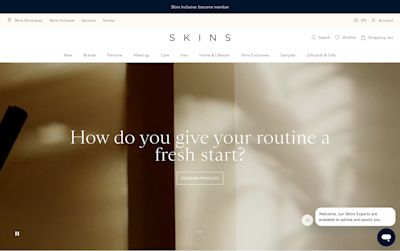
Skins: loyalty and community
Founded in 2000, Skins is a Dutch retailer of exclusive beauty products from international niche brands.
B2C brand with 24 physical boutiques
available in four languages: Dutch, English, German, and French
customers can order product samples before purchasing
loyalty program to strengthen brand affinity and repeat purchases
Model 4: D2C as an independent revenue stream
The D2C shop is built as a fully fledged sales channel with a meaningful share of total revenue.
full assortments
structured performance marketing
CRM, loyalty, after-sales, and clear process ownership
scaling through new markets or brands
ADAC: service platform and direct sales for mobility
ADAC uses its online presence as a hub where members and customers can access information and services and purchase products such as vignettes, insurance, or mobility accessories directly.
Classification:
An established brand using D2C to unify a complex offering of physical products, digital services, and exclusive content in one place.

Model 5: platform-driven D2C (marketplaces and own shop)
The own D2C shop acts as the central brand hub, complemented by additional digital channels.
own shop as the brand hub
marketplace presence for reach and customer acquisition
channel-specific assortments and pricing logic
UPPAbaby: international brand hub with a multichannel strategy
UPPAbaby uses its ecommerce platform as a global entry point for parents. The own shop functions as a brand hub, complemented by additional digital channels.
Classification:
A global premium brand that uses D2C as the core of its multichannel strategy, ensuring consistent brand experience across all touchpoints.

Model 6: D2C as a direct service or spare parts channel
In this model, service and supply take center stage.
spare parts, accessories, consumables
self-service portals for registration, warranty, and repairs
D2C as an after-sales platform
Brita Yource: filters and services directly from the manufacturer
Brita Yource offers water filter solutions and services directly to consumers, including subscriptions for consumables.
Classification:
A typical after-sales scenario where consumables and services support a durable product portfolio.

Implementing D2C ecommerce with Shopware
D2C ecommerce enables you to build direct customer relationships, improve margins, and gain full control over pricing, assortment, and customer experience. You gain insight into customer behavior, can test products and pricing strategies, and reduce dependence on retail partners.
At the same time, D2C introduces additional requirements: reliable processes for shipping, returns, and service, new responsibilities, robust marketing structures, and a system landscape that reliably processes product, customer, and order data.
Shopware provides the technical foundation to implement D2C at scale. The platform integrates with ERP, PIM, and CRM systems and supports complex assortment logic.
API-first architecture
high extensibility
powerful and reliable commerce capabilities
Get to know Shopware
Build an independent and resilient sales channel with your D2C shop. Reach customers directly and test product ideas through direct sales. Get started with Shopware now.
D2C ecommerce – frequently asked questions
What does D2C ecommerce mean?
D2C (direct-to-consumer) ecommerce describes a manufacturer selling directly to end customers via its own digital channels, such as an online store or app, without intermediaries. Brand, pricing, customer experience, and customer data remain fully under the manufacturer’s control.
What are the benefits of D2C for brands and manufacturers?
D2C enables higher margins, direct customer access, strong brand control, and faster testing of products and pricing. You gain full customer data, can optimize marketing, reduce dependence on retail partners, and validate new assortments or markets more quickly.
What challenges arise when building a D2C channel?
Key challenges include marketing costs, B2C logistics, returns management, customer service, and system integrations (shop, ERP, PIM, CRM). Clear responsibilities and processes are essential.
How do manufacturers get started with D2C ecommerce?
Getting started involves six core steps: defining objectives, analyzing target groups, structuring assortment and pricing, building the technical system architecture, planning go-to-market, and continuous optimization.
Which products are best suited for D2C?
Products with strong brand identity, repeat purchase potential, or high advisory needs perform particularly well. Typical examples include consumables, premium products, exclusive bundles, or customizable variants.
Does D2C inevitably conflict with retail partners?
Not necessarily. Conflicts mainly arise when pricing or assortments are not coordinated. With aligned pricing policies, D2C can coexist with retail without creating competitive situations.
What role does Shopware play in D2C ecommerce?
Shopware provides an API-first commerce platform ideal for D2C. It integrates seamlessly with existing systems, supports complex assortments, international rollouts, and consistent omnichannel customer experiences.