




In Germany, online shops and marketplaces now handle several hundred billion euros in B2B sales each year. Ecommerce now accounts for a significant share of total B2B sales, with stable growth rates despite periods of economic weakness.
Wholesale digitalization: The key facts in a nutshell
Business customers expect digital ordering channels, complete product data, up-to-date availability, and self-service capabilities.
Platforms like Amazon Business and Unite are shifting market share and increasing pressure on other wholesalers.
A B2B shop or customer portal provides easy access to pricing, orders, documents, and service processes.
Stable ERP, PIM, and logistics data are essential for accurate orders and reliable delivery times.
Modern commerce platforms sometimes need to address complex B2B requirements.
Shopware provides a scalable, API-based foundation for reliable implementation of B2B shops, customer portals, and integrations.
Why is wholesale digital important?
The digitization of wholesale is important because key areas of the business, such as procurement, sales, service, pricing, logistics, and data management, are now predominantly controlled digitally.
Business customers seek information online, expect complete product and availability information, and use digital ordering and service processes.
At the same time, platform providers are gaining market share, and analog processes add measurable costs and delays. Without digital structures, wholesale loses reach, speed and control.
Competition from platforms and direct sales
Marketplaces such as Amazon Business and Unite are increasingly taking on tasks traditionally performed by wholesalers: product research, price comparison, order fulfillment, and in some cases, warehousing. They offer a wide range of products and binding delivery times.
Many manufacturers are also developing their own sales portals or ecommerce channels. For wholesalers, this means that customers can order directly from the manufacturer if the ordering process is easier or faster there. The traditional advantage of a wide range of products and personal service is no longer sufficient when digital alternatives are better structured, faster to access, or provide more comprehensive information.
What areas of wholesale are affected by digitization?
The digitization of wholesale involves several areas of activity, each affecting different aspects of the wholesale business model:
Digital Sales
Dealing with marketplaces
Process Automation
The systematic use of data
Organizational Adaptation
Digital sales: B2B online stores and customer portals
Digital sales are an important area of activity, as most product research and order preparation takes place online. A B2B shop takes over functions that were previously handled by phone, fax, or email.
Custom prices and discounts: Map complex pricing structures from ERP, including tiered, master, and special conditions.
Individual assortments: View approved items per customer or customer group.
Fast ordering capabilities: Upload order lists, CSV files, or use item numbers to place orders directly.
Availability and lead time displays: Output current inventory levels and reliable lead-time information directly from the ERP or WMS.
Self-service: Provide delivery notes, invoices, returns processes, serial numbers, or certificates.
Tip: Here you’ll find tips on pricing strategies in B2B.
Marketplaces and platform strategies
Marketplaces are increasingly taking on procurement tasks and are being used in parallel with supplier shops. For wholesalers, this results in three basic roles:
Sell through existing marketplaces: Leverage external platforms to expand reach and provide an additional sales channel.
Marketplace to complement your own website: Integrate marketplace features such as merchant listings, product enhancements, or service offerings.
Custom platform models: Create your own marketplace where additional suppliers, resellers, or service partners can be integrated.
Process digitization and automation
Internal processes are a significant cost factor for wholesalers. Typical digitization initiatives related to these processes include
Order Processing: Automatically generate orders from the store or EDI without re-keying.
Warehouse processes: Mobile data capture, paperless picking, automated route planning.
Purchasing: Determine demand based on sales data, minimum inventory levels, and lead times.
Logistics: Automate the creation of shipping labels, notifications, or customs documents.
Document flow: Digitally store and deliver delivery notes, invoices, and shipping documents.
Data management and product information
Wholesalers work with extensive and sometimes complex product information. Missing or inconsistent data leads to constant inquiries, incorrect orders, and logistics problems. A key area of focus is the creation of a robust database.
Implementation or modernization of a PIM system: Structured maintenance of master data, technical characteristics, documents and variants.
Data quality assurance: role assignment, clear responsibilities, maintenance processes, and regular validations.
Multi-channel delivery: Deliver the same data to stores, marketplaces, catalogs, customer portals, and internal systems.
Enrichment: Add text, images, standards, certificates, and custom information.
A reliable data structure is essential for accurate orders, functioning self-service processes, and effective use of search and filtering capabilities.
Leveraging data and AI in operations
A digitized system generates rich data about orders, assortments, prices, and customer behavior. Specific examples of wholesale applications:
Demand Forecasting: Use historical order patterns to better plan inventory and replenishment.
Pricing: Identify items with low margins or price volatility and develop structured pricing strategies.
Assortment management: Identifying assortment weaknesses or items with low relevance compared to procurement or inventory costs.
Identity and credit checks: Use rules and models to identify high-risk orders.
Analyze store usage: Evaluate search queries, abandoned shopping carts, or frequently viewed items to optimize your online assortment.
Guide: How do I develop a wholesale digital strategy?
A viable digitization strategy gives you the clarity you need about what you want to digitize, why you want to do it, and how to put the projects in a logical order. Your digitization strategy is developed by analyzing your current situation, defining goals, organizing the necessary actions into an actionable sequence, and assigning responsibilities.
Step 1: Analyze your current situation
Before you decide on a course of action, you need to know where you stand. So check your current situation against these criteria:
Customer Journey: How are your customers ordering today? What information are they missing?
System landscape: How stable and integrated are ERP, warehouse, shop, PIM and CRM?
Data Quality: Are product information, pricing, inventory, and customer master data complete and accurate?
Processes: Where do wait times, duplication, or media breaks occur?
Competition: What digital services are offered by direct competitors or platforms?
Step 2: Set your goals
Your digitization journey needs goals to guide your business. Typical goals in wholesale are
More orders through digital channels
Less manual work for your back office
Stable inventories and fewer out-of-stocks
Higher share of digital sales
Improve data quality for purchasing, sales, and logistics
Step 3: Create a realistic roadmap
Define the order of your projects:
Lay the foundation: stabilize ERP, clean up master data, implement or modernize PIM
Digitize core processes: B2B shop or customer portal, automated order entry, digitized warehouse and logistics processes
Enhancements: Marketplace connection, additional self-service capabilities, analytics, and initial AI applications
Step 4: Select the right systems and partners
When selecting your technology and service providers, consider the following
Integration: Can the systems exchange data reliably?
B2B functionality: pricing logic, role models, assortment control, variants.
Extensibility: Marketplaces, logistics partners, additional channels.
Stability: Performance, support, upgradeability.
Experience: Partner with wholesale projects and knowledge of the process landscape.
Step 5: Establish clear responsibilities
Make sure you do:
Tasks for master data, price lists, and system maintenance are clearly distributed.
A manager coordinates the digitization project
All affected areas are trained
There is regular coordination between sales, purchasing, warehousing, IT and marketing.
Examples of successful wholesale digitization
Successful digitization in wholesale distribution is primarily reflected in how orders are processed, how data is maintained, and how quickly customers can access the information they need.
The following Shopware project examples illustrate the tangible improvements companies achieve when they digitize their sales, data, and processes.
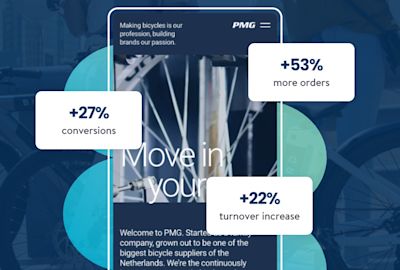
With Shopware, PMG has created a modern B2B portal that significantly simplifies the procurement process for specialist retailers and partners. Thanks to deep system integration, even highly complex sales targets and conditions are mapped in real time.
Key improvements:
Individual control: Display of sales targets and credit limits directly within the customer account.
Automation: Customer-specific pricing and conditions are seamlessly synchronized from the ERP system.
Self-service: Autonomous management of orders and documents reduces support workload.
Navigation: Fast access to specialized product assortments for buyers.
Benefits:
Reduced workload for internal sales through digitized standard processes.
Greater transparency for customers with real-time insights into budgets and limits.
Fewer errors in order processing thanks to direct system integration.
The project demonstrates how wholesalers can strengthen their sales operations through a powerful portal while significantly lowering internal administrative costs at the same time.
Veolia used Shopware to build a portal that enables customers to independently access services, equipment information, and documents. Since its launch, the system has reduced typical and recurring inquiries that previously had to be handled manually.
Key improvements:
Access to contracts, equipment data, service records, and status information
Direct booking or modification of specific services
Digital document management for recurring processes
Clear navigation for technical content
Benefits:
Noticeable relief for the service and support teams
Fewer interruptions in day-to-day operations
Higher customer satisfaction, as information is available instantly without waiting times

Wholesale digitalization with Shopware
The degree of digitization in wholesale distribution determines how visible you are in the marketplace and how stable your customer relationships remain. Your customers expect complete product data, reliable delivery times, easy-to-understand ordering processes, and more and more self-service capabilities.
Shopware provides the right technical foundation. The platform is designed to map complex B2B scenarios and integrate with your existing systems:
API-first architecture: robust integrations with ERP, PIM, WMS, CRM, and marketplaces
Powerful B2B features: custom pricing, role models, approvals, fast ordering
Structured data processing: clear interfaces for product, customer and order data
High extensibility: modules for marketplaces, configurators, self-services, and custom features
Scalable system base: suitable for large product ranges, many customer accounts and complex sales structures
This gives you a commerce platform that meets your customers' needs and can adapt to new business models, market conditions, or product offerings.
We are here for you
Your vision is what drives us. Behind Shopware are people who want to pave your way to success. Tell us what we can do for you.
Digitalization in wholesale – frequently asked questions
vsasv
coming soon
coming soon
coming soon
^ssv^
coming soon
savddasv
coming soon
^sv^
coming soon
rsnsng
coming soon