
Imagine Home Digital connects interior design and commerce with Shopware
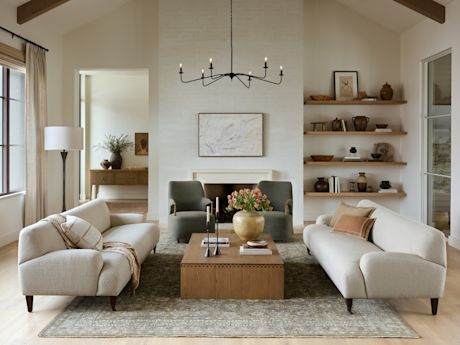


Key facts:
Shopware Plan
Company
Features
Technical features
Benefits of Shopware:
Payments that fit the business model
Shopware accommodates Imagine Home Digital’s embedded payment solution, allowing designers to use their own merchant accounts for furnishing purchases.
Individual storefronts within one platform
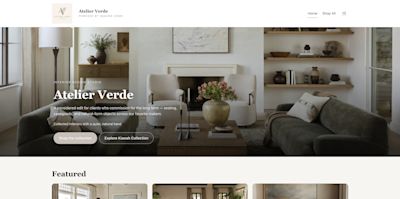
Independent design businesses can offer distinct shopping experiences within Imagine Home Digital’s broader ecosystem.
A familiar way to complete a purchase
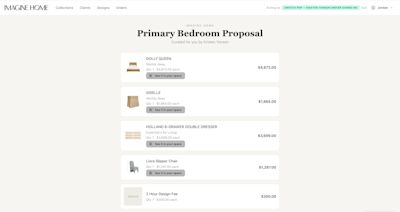
An integrated shopping cart gives designers the transaction experience they requested during beta testing.
Freedom to develop spatial commerce
A headless architecture lets Imagine Home Digital connect commerce with its custom design tools and develop new ways to shop.
What next?
Connecting the Design Process to the Purchase
Imagine Home Digital brings an interior designer’s workflow into one platform: scan, design, source, buy, and track. Designers can capture a room, develop a design, choose furnishings, and move a project through purchasing and order tracking.
As the company developed that experience, beta users made an important request. They wanted a traditional shopping cart.
Founder and CEO Staci Lantz had initially considered handling payments and coordinating purchases without a conventional cart. Designers wanted the reassurance of a buying process they already understood.
“When we were in beta testing, it was the designers that really pushed for a traditional shopping cart,” says Lantz.
Shopware became the commerce platform within that wider experience. Its role was to connect Imagine Home Digital’s custom tools with a shopping cart, individual designer storefronts, and the payment arrangements those independent businesses needed.
Making Payments Work for Independent Designers
Furniture purchases presented a particular challenge. According to Lantz, interior design projects can range from approximately $1,500 to $150,000, making large payments a routine consideration for the businesses Imagine Home Digital serves.
Many designers relied on ACH payments and wire transfers. Bringing those purchases into the platform required a merchant solution suited to the amounts involved and to the way designers operate their businesses.
“We needed a good merchant solution, and that required us to be able to underwrite the designers on the front end and allow them to use their own merchant accounts,” says Lantz.
Imagine Home Digital developed its own embedded payment tools to address those requirements. The commerce platform had to accommodate that solution alongside the design experience.
Shopware’s headless architecture gave the team the flexibility to bring those components together. Designers could use their own merchant accounts while offering clients a purchasing experience within the Imagine Home Digital platform.
Choosing a Partner With a Shared Vision
The agency developing Imagine Home Digital’s mobile application introduced the company to Shopware. Lantz had already begun discussions with another commerce provider, but the agency encouraged her to explore a team whose interest in spatial commerce closely matched her own.
That alignment mattered because visualization was central to the product. Imagine Home Digital was using gaming-related technology to help designers build rooms, adjust lighting, and show clients how a space could look.
Lantz wanted a commerce partner that understood where those experiences could lead: customers exploring furnishings in the context of their own homes and moving directly from visualization to purchase.
“It was the vision and I think the fact that Shopware was actively engaging and talking about this vision excited me,” she says.
The decision reflected both the immediate need to embed commerce and confidence that the partnership could develop as the buying experience evolved.
Building Individual Storefronts Into a Shared Platform
An external agency developed the mobile application’s front end, while Imagine Home Digital’s CTO built the Shopware integration in-house.
The shopping cart was among the final components added during beta testing. Shopware could be integrated into the existing environment, allowing the team to build on the design tools and payment capabilities they had already developed.
The implementation also supported a central requirement of the business model: multiple independent retailers operating on a single platform.
Each designer needed their own storefront and customer experience. Imagine Home Digital was planning for hundreds of these businesses, so the ability to support individual storefronts within a shared environment was particularly valuable.
Around the Shopware implementation, the company built its own search, chat, and manufacturer order-management tools. The wider platform also connects with manufacturers’ ERP systems to support the flow of orders. These custom components work alongside Shopware’s commerce capabilities to support the full design workflow.
Launching With Support From the Shopware Community
At the time of the interview, Imagine Home Digital had recently moved from beta into a live product. Lantz described the early commerce experience as smooth, with the shopping cart now part of the platform designers were using.
The relationship with Shopware also extended into the design community. After attending a Women in Ecommerce event through Shopware, Lantz welcomed its support for a similar gathering at High Point Market.
Shopware sponsored the event, bringing together women working in ecommerce and design. For Imagine Home Digital, it was an opportunity to introduce the platform to the independent businesses it was built to serve.
Jordan Kanaley recalls meeting a designer afterward who was still wearing a charm necklace from the gathering. Attendees were also setting up their own storefronts, giving the event a direct connection to the platform’s launch.
“The partnership with the Shopware team has just been amazing,” says Lantz.
Developing the Next Furniture-Buying Experience
With commerce now integrated into the platform, Imagine Home Digital is exploring how visualization can shape the next stage of furniture shopping.
Lantz describes a possible journey that begins with a light fixture spotted at a trade show. A shopper could scan a QR code, view a 3D version of the fixture in their own space, and continue to a shopping cart to buy it. Similar experiences could connect product discovery on social media with a purchase.
For Lantz, the value lies in helping clients understand what they are buying. Designers may be able to picture how a piece will work in a room; their clients often need to see it. More immersive previews could help customers assess fit and appearance before placing an order, potentially reducing unnecessary returns and transportation.
The company is also exploring opportunities with homebuilders, including the ability for homeowners to walk through a fully furnished version of a home before purchasing its contents.
Further ahead, Lantz sees potential for manufacturers to develop their own Shopware experiences, making it easier to connect them with Imagine Home Digital. She also views the partnership as valuable to future expansion into Europe.
Lantz expects designers and architects to lead that change, helping clients see how a furnished space will look before committing to the purchase.
Features used in this case
Discover the power of innovative Shopware features - the core of our unique solution. Experience which of these features our customer has successfully used in their own case. Dive deeper into the details and use this inspiration for your own project.
Shopping Experiences
Collaborate with your team on Shopping Experiences. Create draft layouts of your store(s) and track changes with versioning and an activity feed.
Discover more about Shopping Experiences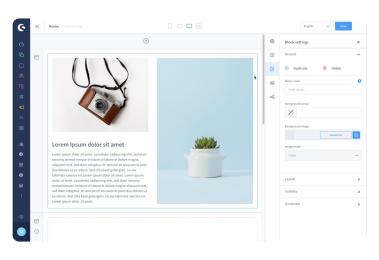
3D-Viewer for Shopping Experiences
Add interactive 3D product views to your storefront using Shopping Experiences. Let customers explore products from every angle.
Unlimited Sales Channel
Create and manage multiple sales channels without limits. Sell across online stores, POS, marketplaces, and social platforms.