
Every new integration promises to make commerce operations more efficient. But what happens when those connections become the very thing slowing your business down?
For merchants, solution architects, and agencies managing increasingly complex commerce environments, the challenge is no longer simply connecting systems. It's keeping them connected, reliable, and adaptable as business requirements change.
That's where Shopware Nexus comes in – a Shopware-native, event-driven orchestration layer designed to simplify integrations and reduce the long-term cost of maintaining them.
The hidden cost of disconnected commerce systems
Modern ecommerce depends on a network of specialized systems. Your ERP manages business-critical data, your PIM organizes product information, your CRM supports customer relationships, and your warehouse management system keeps fulfillment moving.
Connecting these systems is essential. But how you connect them can make a significant difference to your bottom line.
Traditionally, businesses have relied on custom plugins, scripts, and point-to-point integrations to move data between applications. While this approach can solve immediate requirements, complexity often increases as the commerce stack grows.
Each new connection introduces another dependency to maintain, monitor, and troubleshoot.
Consider a typical order process. An order placed in your online store needs to reach your ERP, trigger fulfillment, update inventory, and potentially synchronize customer information across multiple systems.
If one connection fails, the consequences can extend far beyond IT.
Orders may require manual intervention. Inventory information can become outdated. Customer service teams spend valuable time investigating discrepancies. Developers are pulled away from strategic projects to fix integrations that should already work.
And the costs don't stop after implementation.
Custom integrations require ongoing maintenance as APIs change, systems evolve, and business requirements expand. What initially appeared to be a straightforward technical solution can become a recurring operational expense.
The real cost of integration isn't just building connections. It's keeping your entire commerce operation running reliably as those connections multiply.
Why commerce-native orchestration makes a difference
Traditional point-to-point integrations focus on connecting individual applications. Generic integration platforms, often called integration platform as a service (iPaaS) solutions, go further by coordinating data exchanges and processes across systems.
But commerce introduces requirements that go beyond moving data from one application to another.
An order isn't simply a record to transfer. It's part of a broader business process involving payment, inventory, fulfillment, customer communication, and potentially complex B2B requirements.
Understanding this context matters.
Shopware Nexus approaches integration from within the commerce ecosystem.
As a Shopware-native orchestration layer, Nexus is designed to coordinate workflows around commerce events rather than relying exclusively on individually developed connections.
Instead of treating each integration as an isolated technical project, businesses can organize processes around the events that drive their operations.
For example, when a customer places an order, that event can initiate a workflow involving multiple connected systems.
This approach creates opportunities to make integrations easier to manage and adapt.
For solution architects and agencies, this means spending less effort rebuilding routine integration logic and more time designing solutions that address specific business requirements.
For merchants, it means moving toward a more manageable integration architecture that can evolve alongside the business.
From custom code to coordinated workflows
Reducing integration complexity requires more than another way to connect APIs. Teams also need practical tools to design, manage, and troubleshoot the processes connecting their systems.
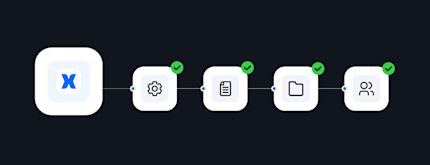
Nexus brings these activities together through an orchestration approach built around visual workflows, event triggers, data mapping, and retry mechanisms.
Visual workflows make processes easier to understand
Custom integrations often hide important business logic inside scripts or plugins. Understanding what happens when an order is placed, inventory changes, or a customer record is updated can require developers to examine multiple systems.
Visual workflows make these processes easier to follow.
Instead of tracing individual pieces of custom code, teams can work with a clearer representation of how events and actions connect.
This can improve collaboration between developers, solution architects, and operational teams, especially when processes need to change.
Event triggers connect actions to business activity
Commerce processes frequently begin with a specific event.
An order is created. A payment status changes. Product information is updated.
Event-driven orchestration allows these activities to initiate workflows across connected applications.
For example, an order event could trigger the transfer of relevant information to an ERP system, followed by additional processing steps.
Rather than maintaining separate custom logic for every interaction, teams can organize the process around a defined sequence of events and actions.
Data mapping reduces repetitive integration work
Different systems rarely structure information in exactly the same way.
Product identifiers, customer records, order fields, and inventory data may use different formats or conventions.
Data mapping helps translate information between systems, reducing the need to repeatedly implement transformation logic in custom scripts.
For businesses operating complex commerce environments, this can make integrations easier to adapt when requirements change.
Retries and visibility support more reliable operations
External systems aren't always available. APIs can experience temporary failures, and requests may not complete successfully on the first attempt.
Without suitable error-handling mechanisms, these issues can lead to missing updates, manual corrections, or delayed processes.
Retry mechanisms help teams handle certain temporary failures without rebuilding the entire integration.
Combined with workflow visibility, they can also make it easier to understand where a process encountered a problem and what needs attention.
Embedded Copilot assistance simplifies workflow management
Nexus also brings AI assistance into the orchestration experience through Copilot.
The aim is to help teams streamline workflow setup, management, and debugging, reducing the effort involved in working with complex integration processes.
Rather than replacing technical expertise, this approach can help developers and architects focus their attention on higher-value decisions.
Together, these capabilities support a more structured way to manage commerce integrations – one that prioritizes clarity, adaptability, and operational control.
What smarter integration means for your business
The value of orchestration isn't measured by how many systems you can connect. It's measured by how effectively those connections support your business.
For merchants, agencies, and technology teams, a more coordinated approach can deliver benefits across several areas.
Faster integration development
Reusable workflow logic and visual configuration can reduce the amount of custom implementation needed for recurring integration scenarios. This creates opportunities to shorten development cycles and respond more quickly to new requirements.
Lower long-term integration costs
Reducing dependence on individually maintained scripts and plugins can help limit ongoing maintenance effort. Over time, this can contribute to a lower total cost of ownership.
For an overview of the available Shopware plans and pricing, visit our pricing page.
Greater operational visibility
When workflows are easier to inspect and troubleshoot, teams can identify issues more efficiently and spend less time investigating disconnected systems.
Less maintenance, more room for innovation
Every hour spent repairing fragile integrations is an hour unavailable for improving customer experiences, expanding into new markets, or developing new commerce capabilities.
For agencies, a more structured integration approach can also make solutions easier to maintain and evolve across customer projects.
And for commerce leaders, the benefits extend beyond IT efficiency.
More dependable processes can support better operational planning, faster adaptation, and greater confidence in the systems behind everyday business activity.
As Sam Crudge Hill, Technical Product manager for Nexus explains:
“We built Nexus to solve the problem of creating the connections you need to power your E-commerce journey. We believe that maintaining and changing these relationships with 3rd parties should feel easy and not cost you the earth when a system changes or a business need requires adaptability.”
Building the foundation for agentic commerce
Commerce integration requirements will continue to evolve.
As AI becomes more deeply embedded in business operations, the ability to coordinate actions across different systems will become increasingly important.
Consider a future in which an AI agent can support purchasing decisions, initiate business processes, or respond to changing inventory conditions.
For these scenarios to work reliably, AI needs more than access to information. It needs a dependable way to interact with the systems responsible for executing business operations.
This is where orchestration becomes particularly relevant.
Event-driven workflows and clearly defined system interactions can provide an architectural foundation for connecting AI-driven decisions with operational processes.
Nexus represents a step toward that more connected commerce environment.
While agentic commerce will introduce additional requirements around permissions, governance, and control, businesses can already benefit from making their integrations more structured and manageable today.
The objective isn't to predict every future use case. It's to build a commerce architecture that can adapt when new opportunities emerge.
Ready to simplify your commerce integrations?
You don't need to rethink your entire commerce stack overnight. Start by identifying one fragile or costly integration and explore how Nexus could turn it into a more manageable workflow.
→ Talk to a Nexus expert to learn more