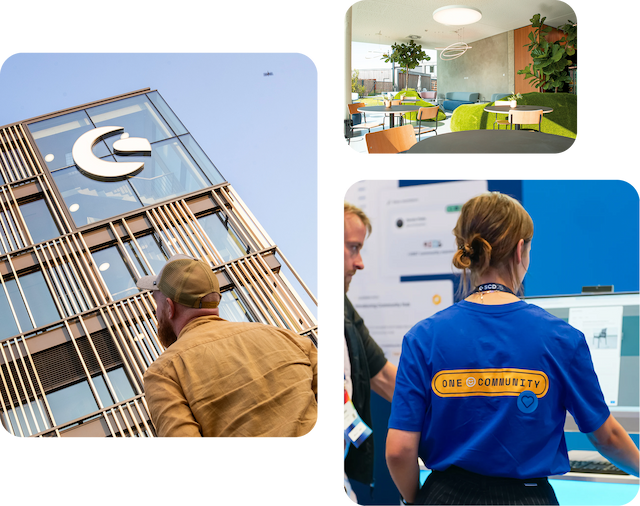


While our main SCD 2026 recap covered the biggest product announcements like Nexus, Shopware Payments, Copilot as well as event highlights, this post is dedicated to the technical content that took place across the Tech Stage and Deep Dive sessions.
From authentication and platform engineering to AI-assisted development, composable commerce, and Shopware's next-generation content system, our speakers shared practical insights, real-world experiences, and a glimpse into what’s next for ecommerce development.
Below you'll find a summary of each session, along with recordings, slides, and additional resources.
Seamless Logins for Everyone
Joshua Behrens, HEPTACOM
Authentication is often one of the most underestimated challenges in complex commerce ecosystems. Joshua explored how OAuth2 and SAML can be used across Shopware, external systems, and B2B environments to create seamless login experiences for administrators, customers and bots (e.g. AI agents) for even more than just logging in. The session demonstrated how Shopware can act as an Identity Provider (IDP), enabling centralized authentication and reducing friction for users moving between different systems.
Key Takeaways
Shopware can act as an Identity Provider
OAuth2 and SAML unlock advanced authentication scenarios
Single sign-on can simplify complex commerce environments
Identity Provder benefits users in customizations and admins in trust and compliance
Slides: https://www.heptacom.de/scd2026/slides.pdf
Shopware PaaS: Our Experience with Hosting Shopware on a Distributed Environment
Patrick Derks & Tim Lange, Shopware
Running Shopware at scale introduces a different set of challenges than traditional hosting environments. Patrick and Tim shared their experience building and operating Shopware in a distributed Kubernetes-based architecture.
Key Takeaways
Distributed environments require different architectural patterns
Kubernetes enables scalability but introduces operational complexity
Platform engineering becomes increasingly important as projects grow
Best Practices Using Shopware for Composable Commerce Projects
Christoph Guthardt & Thomas Keppler, blindwerk
This session walked through the transformation of a large Shopware project into a more scalable and future-ready commerce platform. Using practical examples, Christoph and Thomas demonstrated how API-first integrations, cloud-native infrastructure, composable frontends, and MACH-inspired principles can improve flexibility and long-term maintainability.
Key Takeaways
Composable architectures allow teams to evolve systems incrementally
API-first thinking improves flexibility and integration capabilities
Cloud-native deployments support scalability and operational efficiency
Slides: https://www.blindwerk.de/talk/scd2026/
A Reality Check on AI Driven Software Engineering 2026
Stefan Hamann & Daniel Nögel, Shopware
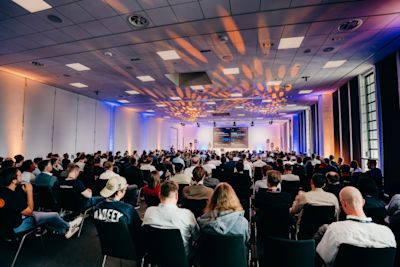
AI-generated code is becoming increasingly capable, but does that mean software engineering becomes easier? Stefan and Daniel shared practical experiences from real-world projects and discussed how the role of developers is evolving. The session focused less on writing code and more on defining intent, orchestrating systems, validating outputs, and making informed decisions in increasingly AI-assisted workflows.
Key Takeaways
The bottleneck is shifting from implementation to problem definition
Non-deterministic systems require new testing and debugging approaches
Human judgement remains essential in AI-driven development
Slides: https://agentic-commerce-lab.github.io/SCD-2026-Slides/
A Look Behind Shopware’s Next-Generation Content System
Philipp Schuch
Philipp provided an early look at the ideas and architecture behind Shopware's next-generation content system. The session explored how the new foundation aims to support more composable, extensible, and future-ready commerce experiences while offering greater flexibility for developers and merchants alike.
Key Takeaways
Content architecture is being rethought for future commerce requirements
The new system focuses on a more flexible data model rather than complex template changes.
It addresses many general customer requests and improves the overall developer experience
Developers have an opportunity to influence the direction through early feedback
Boost Your Dev Pipeline
Soner Sayakci, Shopware
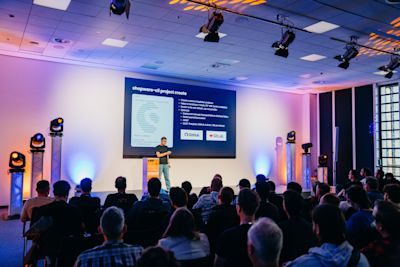
Soner shared practical recommendations for modern Shopware development workflows based on real project experience. From local development environments using Docker and shopware-cli to extension management, deployment automation, and environment provisioning, the session highlighted ways to reduce friction throughout the development lifecycle.
Key Takeaways
Consistent local environments improve developer productivity
Deployment automation reduces operational overhead
Modern tooling helps teams move faster with fewer errors
Slides: https://speakerdeck.com/shyim/boost-your-dev-pipeline
Deep Dive Sessions – The Pattern, Not the Tool: A Technical Deep Dive Into AI Tooling for Any Project
Martin Bens, Shopware
Rather than focusing on individual AI products, Martin explored the underlying concepts that make modern AI assistants effective. The session covered mental models for working with large language models, context management, skills, workflows, and practical techniques for turning AI from a novelty into a reliable productivity tool.
Key Takeaways
Understanding concepts matters more than following tool trends
Context management is critical for quality results
Humans remain responsible for direction, validation, and decision-making
Slides: https://ecommerce.shopware.com/hubfs/DEV/SCD_2026_Martin_Bens.pdf
Caching What Matters: A Technical Deep Dive into Shopware's 6.7 Cache Rework
Andrii Havryliuk & Jonas Elfering, Shopware
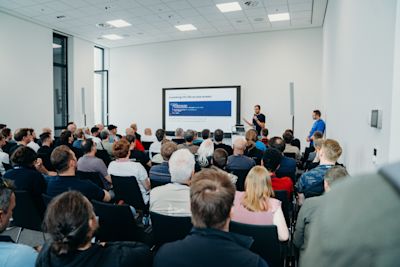
One of the most technical sessions of the day focused on the complete redesign of Shopware's caching architecture. Andrii and Jonas explained the limitations of the previous approach, the reasoning behind the redesign, and how the new architecture improves cache efficiency, scalability, and performance for modern commerce workloads. A significant part of the session also focused on the potential behavior changes introduced by the new caching approach, what impact they may have on existing projects and extensions, and how developers can prepare their implementations for the new architecture.
Key Takeaways
The new cache architecture is available behind the CACHE_REWORK feature flag.
Logged-in users and cart-related scenarios benefit from the redesigned caching behavior.
Developers should review existing projects and extensions for assumptions that may no longer apply with the new caching approach.
The session provided practical guidance on identifying and handling potential compatibility issues.
The new architecture provides a stronger foundation for building high-performance commerce experiences.
Slides: https://ecommerce.shopware.com/hubfs/DEV/Caching_Rework_V2.pdf
Continue Learning
A huge thank you to all speakers for sharing their expertise and practical experiences with the Shopware community.
If you'd like to dive deeper, all recordings, slides, and resources are available above. We hope they help you build, optimize, and scale your next Shopware project.