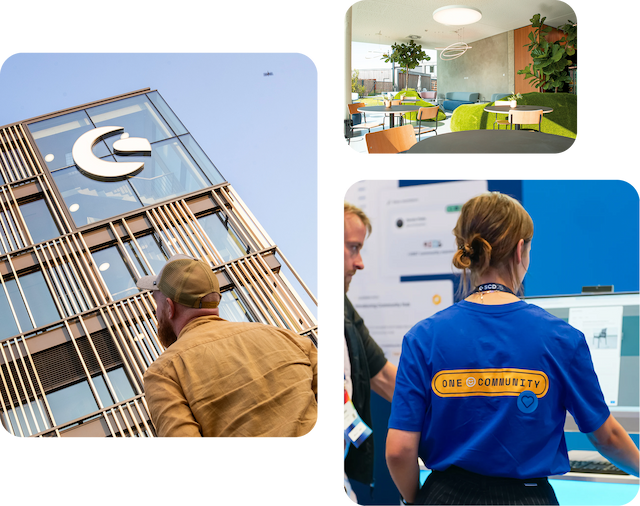


If you spent any time at the last Shopware Community Day, you probably noticed something unusual. Sure, PayPal’s logo was on the main stage banners as a headline sponsor. That’s standard corporate protocol for a global payments engine.
But if you walked into the community-run pre-parties or stopped by the FireGento hackathon, you didn't only see branding. You saw PayPal engineers, partner managers, and product leads sitting at tables with local developers grabbing a drink and discussing code.
For a long time, the relationship between payment providers and open-source platforms was transactional. Platform leaders and corporate executives met behind closed doors, signed distribution deals, built a native plugin, and called it a day.
So why is a global financial leader suddenly pulling up a chair at developer hackathons? What is driving this shift toward direct, grassroots involvement with Shopware agencies and community maintainers?
The shift to grassroots engagement
Traditionally, if a payments company wanted to grow its market share in ecommerce, it focused almost exclusively on top-down platform partnerships. If you were the default payment option in the core platform installer, you won.
But ecommerce has matured, and the way merchants build stores has changed. Today, the real decisions about store architecture, user experience, and checkout integrations happen in agency rooms and developer Slack and Discord channels.
A direct relationship with an agency gives you something a top-level platform meeting never can and that is honest and real-time context about what actually happens in production.
When you talk to a developer who is implementing Shopware for a mid-market merchant, the conversation is practical. Does the API respond reliably, and in a documented way? Is the sandbox easy to test? Does the plugin conflict with custom checkout modules?
Through active participation in grassroots events, like sponsoring community-organized pre-parties and putting team members inside FireGento hackathons, PayPal is shifting its focus toward the people who actually build the web. It’s about establishing direct channels such as PayPal rolling out an official Agency Partner Program, designed to give agencies direct lines of communication, technical support, and co-marketing opportunities rather than treating them as passive resellers.
How PayPal’s core product is evolving
To understand why direct community relationships matter so much right now, you have to look at how PayPal’s core product is changing. For nearly two decades, PayPal’s role in ecommerce was simple. They provided a trusted yellow checkout button that redirects buyers to a secure payment window. But over the past year, the company has undergone one of its most technical transformations to date, moving from a transaction processor to a full-suite commerce discovery engine.
The push into AI-driven commerce highlights this evolution:
Agentic Commerce Protocols: Partnerships with OpenAI, Perplexity (Instant Buy), and Google’s Agent Payments Protocol.
Agent Ready: A framework allowing existing merchants to accept payments initiated by autonomous AI agents without needing custom API re-engineering.
Store Sync: A real-time data layer that syncs a merchant’s full catalog directly into AI shopping surfaces in a single step.
Here’s where the Shopware connection becomes critical: Shopware was selected as one of only four launch partners globally for Store Sync. PayPal went so far as to acquire Cymbio to solidify this catalog-discovery layer directly.
Think about what this means for a Shopware agency or merchant.
In the near future, buying a product won't just happen because a user navigated to a webshop, added an item to a cart, and clicked checkout. It will happen inside AI conversational interfaces, spatial computing environments, and automated purchasing agents.
If PayPal wants merchants to adopt these complex multi-layered services (like instant AI catalog sync to context-aware checkout), they need Shopware agencies who understand the platform’s extensible architecture and can confidently implement these next-gen capabilities for their clients.
If the technology is getting more complex, the trust between the payment provider and the developer building the store has to get stronger and the communication lines shorter.

What does real support actually look like?
There’s a long-standing running joke in the open-source world about corporate "open-washing" when a large tech company drops money on a community project, posts a PR photo, and takes no further interest.
But supporting an open-source community has to mean showing up. It means having the team present at events, taking part in discussions, listening when things aren't working smoothly, and actively contributing to the space.
Much of the modern web, including the tools, libraries, and frameworks that power digital commerce, runs on open-source software built by passionate and independent communities. Yet, many larger enterprise entities have historically extracted immense value from open source without giving much back in return.
Does a corporation like PayPal have an explicit responsibility to act as a good steward for communities like Shopware?
The answer is both ethical and practical. Ethically, large tech enterprises rely on the health of these open ecosystems to thrive. If open-source communities fragment due to lack of support, the software quality degrades, security risks increase, and innovation slows down everywhere.
Practically, good stewardship means listening with humility. When an enterprise company enters an open-source space, it cannot dictate terms from the top down. It has to earn credibility by proving it respects the culture and the craft of the people building within that ecosystem.
Meet the PayPal team in person at Shopware Hacktoberfest on the Shopware Campus from October 8–9, 2026. Connect with developers, agencies, and the wider Shopware community, exchange ideas, and get hands-on with the latest e-commerce innovations.
📅 Date: October 8–9, 2026 📍 Location: Shopware Campus, Schöppingen, Germany
Reciprocity in community development
Sustainable community involvement relies on reciprocity. One-sided corporate philanthropy eventually gets cut during the next budget review, but an investment rooted in mutual business benefit can last for years.
But what does reciprocity look like in practice?
For Shopware Agencies & Developers: They get direct access to PayPal's partner team, early insights into upcoming feature rollouts (like Store Sync and AI payment agents), faster resolution times for edge-case technical bugs, and dedicated partner support for their merchant clients.
For Merchants: They receive a more stable and tightly integrated checkout experience that leverages the latest commerce features, driving up conversion rates and reducing drop-off.
For PayPal: They gain developer mindshare, reduced integration friction, faster feature adoption across mid-market and enterprise merchants, and a feedback loop that helps their engineering teams build better products.
When an agency trusts a payment partner's tech and knows they can reach a real human being when something isn’t working, they are far more likely to recommend that payment partner to their clients.
What this means for the Shopware ecosystem
The growing relationship between PayPal and the Shopware community points toward a broader trend in ecommerce which is that the line between "core platform," "extension provider," and "community agency" is blurring.
As digital commerce expands into AI agents, conversational discovery, and unified catalog syncs, no single company can build the future of online shopping in a silo.
For Shopware merchants and agencies, PayPal’s active presence isn't just about getting assistance with checkout buttons. It’s an invitation to help shape how modern payment and discovery tools work within the Shopware ecosystem.
The next time you see a global tech brand pulling up a chair at a community-organized event, don't just write it off as marketing. Look closer. If done right, it’s proof that open-source communities still hold the leverage and that even the largest players in the industry know they need to show up, listen, and build together.